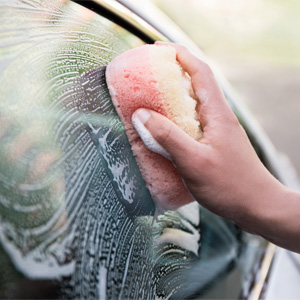
The windscreen in particular must be clean and free of streaks. From the inside, it is often cleaned with glass cleaning agents. On the outside, windscreen wipers and windscreen wash ensure safe driving. Additional effects, such as anti-fogging, help to keep a clear view of the road ahead, even in wet weather conditions.
With the right product, perfume oils and hydrophobic solvents can be clearly solubilised in a glass or windscreen cleaner.
Degreasing means effectively removing hydrophobic dirt (e.g. oils and fats) from a glass surface. Nonionic surfactants are often used in cleaners since they possess a high fat-dissolving power.
In windscreen cleaners, it is crucial to use surfactants that are capable of wetting dirty surfaces very quickly and effectively at very low concentrations. This is why special wetting agents are required.
Everyone knows fogged glass surfaces and mirrors. Especially while driving in the dark and in dense traffic, this can turn out to be a real safety issue. Fogging can be prevented by using a combination of special surfactants and polymers in glass cleaners.
Static charges on glass and plastic surfaces may attract dust and accelerate re-soiling after cleaning. Surfactants with antistatic properties help to prevent static charges on surfaces.
Glass cleaners often come in contact with car parts made of plastic material, e.g. head lights, rear lights and mirror frames. Some surfactants and solvents can cause or accelerate damage, such as stress cracking, on these plastic parts. Therefore, it is important to choose the right surfactants to avoid damage.