Small helpers with large effects. These influence not only the colouring of textiles, but also their fire retardancy or water and oil repellency. Finishing products can have a positive influence in these areas. The application of finishing products can adjust antistatic properties – and thereby the resistance to soiling – according to the customer’s wishes, for example in the back coating of tufted carpets. In order to ensure a smooth finishing process, we offer a line of defoamers and thickeners. These provide the certainty that is especially necessary at the end of the value chain.
... are essential for a comfortable handle and improving the physical properties of woven and knitted textiles. Various finishing processes can negatively impact the handle and tear resistance of products. Fatty acid condensate softeners based on silicone or polyethylene produce elegant, appealing and high-quality goods as well as improved sewability and durability.
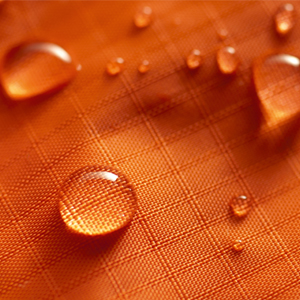
... are indispensable in the field of technical textiles. Products based on modern C6 chemistry fulfil the highest standards of water and oil repellency. In the field of fluorine-free finishing, Zschimmer & Schwarz offers a comprehensive selection of paraffin- or silicone-based auxiliaries.
... enable a large selection of handle qualities. In the areas of finishing and coating, they ensure anything from a very soft to extremely hard handle and have positive effects on a textile’s mechanical properties.
... improve the physiological clothing parameters of synthetic fibres. Hydrophilic agents optimise the moisture absorption, transport and antistatic properties of sport and protective clothing.
... protect the textile from flames. Textiles used for technical purposes – protective and home textiles, for example – must comply with various flame protection standards. Special agents offer these particular textiles the protection they require.
... promote the dissipation of electrical charges. These are added to carpet backings and allow easier dissipation of electrical charges which arise in the course of everyday use. Antistatic agents thus promote hassle-free and comfortable carpet usage.
... reduce foam formation in all aqueous processes. The formation of foam can seriously impact quality at every stage of textile finishing; for example, it can influence the evenness of dyeing or uniformity of coating. The use of defoamers can reliably suppress the formation of foam.
... are applied in conjunction with dispersions or fluorocarbon resin emulsions. Crosslinking agents enable better adhesion between the finish or coating and the substrate. In addition, the wash resistance of finishes and coatings with dispersions or fluorocarbon resin is significantly increased.